In many German gardens, slugs and snails are among the most common problems for home gardeners. If you grow lettuce, strawberries, or vegetables, it can happen that your plants are almost completely eaten overnight.
If you have children or pets, many traditional slug pellets – especially those containing metaldehyde – may not be safe.
Based on my own experience in a 60 m² garden, I’ve summarized eight methods that are relatively child- and environmentally friendly. These include beer traps, copper barriers, slug-repelling plants, and slug pellets based on ferric phosphate, which are also approved for organic gardening.
Germany is known for being environmentally friendly – sometimes so much that after a summer rain you’ll see slugs everywhere in the garden. For gardeners, however, this can be frustrating when carefully grown plants are destroyed overnight.
Because our child has just started walking and spends a lot of time playing in the garden, I tried several methods that are as safe as possible for children and the environment. None of them will eliminate slugs completely, but combining several approaches can significantly reduce their numbers.
1. Beer Traps
This method is very simple.
Bury a small cup or yogurt container in the soil so that the rim is level with the ground, and fill it with a little beer.
The smell attracts slugs, which then fall in.
Tips
- Don’t use too much beer, as it may attract slugs from further away.
- Empty and refill the trap every two days.
In my garden, I mainly place these traps in the vegetable beds, where most slugs appear.
2. Copper Barriers

When slug mucus comes into contact with copper, a chemical reaction may occur that releases copper ions, which creates an unpleasant sensation for the slug.
Because of this, many slugs turn around instead of crossing copper.
However, the effectiveness is debated, and sometimes slugs still manage to cross the barrier.
Copper tape can be applied to:
- raised beds
- plant pots
- planter boxes
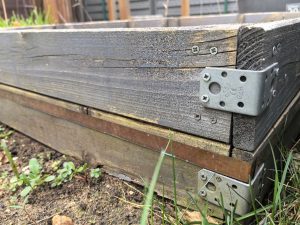
In my garden, the copper plates on my raised bed have already been in use for more than five years.
3. Collecting Slugs at Night (Most Effective)
Even though my garden is relatively small, there are a lot of slugs.
Since May, during the warm months, I often go into the garden at night with a flashlight and collect them. I usually use a 20 cm wooden barbecue skewer to pick them up.
On some evenings, I can collect up to 40 slugs.
4. Wooden Boards or Wet Cardboard
Slugs like moist and dark hiding places.
You can place a wet cardboard sheet or wooden board in the garden. By the next morning, many slugs will gather underneath it, making them easy to remove.
5. Plants That Slugs Dislike
Slugs tend to avoid plants with strong aromas, such as:
- lavender
- rosemary
- thyme
- sage
In my garden, rosemary seems to reduce slug activity in that area – though only within about a one-meter radius.
6. A Popular but Unreliable Tip: Eggshells
Many gardening forums recommend scattering crushed eggshells around plants.
The theory is that the sharp edges will harm slugs.
I tested this idea myself by placing several slugs and a large amount of eggshells in a container, with fresh lettuce on the other side.
After three days, the slugs were still alive and had eaten the lettuce.
From my experience, eggshells don’t really work.
7. Prevention: Remove Weeds and Garden Debris
Slugs prefer moist, shady environments.
Regularly removing weeds, plant debris, and fallen leaves reduces hiding places for slugs.
8. Recommended Slug Pellets: Ferric Phosphate
If you prefer a quicker solution, you can use slug pellets based on ferric phosphate.
Advantages:
- approved for organic gardening
- slugs stop feeding after eating the bait
- they retreat and die after a few days
- relatively safe for birds, hedgehogs, and soil organisms
- breaks down into iron and phosphorus, which are plant nutrients
Slug pellets containing metaldehyde should generally be avoided, especially if children or pets use the garden.
Tips for Use
- scatter pellets sparingly around plants
- apply in the evening when slugs are active
- reapply after heavy rain if necessary
- small amounts distributed widely work best
Ferramol Schneckenkorn(Neudorff)
Advantages:
- One of the most well-known and trusted garden brands in Germany
- Approved for organic gardening
- Relatively rain-resistant, so it lasts longer outdoors
- Suitable for vegetable beds, strawberries, and ornamental plants
Plantura Bio Schneckenkorn
Advantages:
- A newer environmentally focused gardening brand from Germany
- Uses ferric phosphate as the active ingredient
- Gentle on soil life and beneficial microorganisms
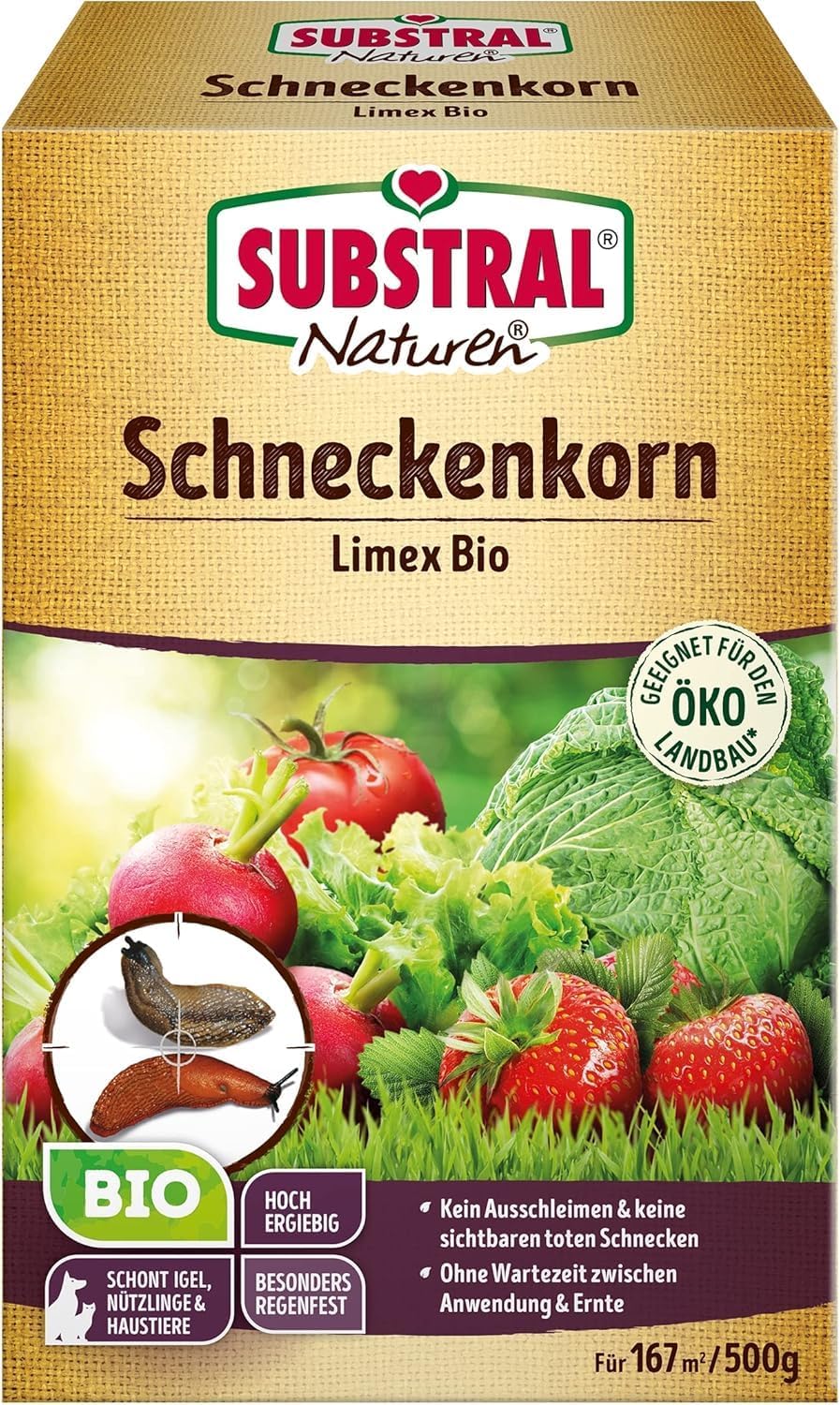
Substral Naturen Limex Bio
Advantages:
- A long-established and well-known gardening brand
- Pellets are fairly resistant to rain
Conclusion
All of these methods have been tested in my own 60 m² garden.
Completely eliminating slugs in a home garden is almost impossible, but combining several strategies can significantly reduce their numbers.
For gardens with children or pets, it’s best to rely on physical control methods and ferric-phosphate slug pellets, while avoiding products containing metaldehyde whenever possible.