
We later realized our child’s winter-long stuffy nose wasn’t due to frequent colds – but mold in our home
Our child is growing up in Germany. Between the ages of one and two, we experienced two almost identical winters.
From November through March, our child’s nose was constantly blocked. Sometimes the congestion lasted for one to two months, improved briefly, and then returned.
Only much later did we understand that the problem was not our child – it was our living environment.
A personal story: How the constant winter congestion began
Around nine months of age, our child began to suffer from recurring nasal congestion. It was winter in Germany, around November.
Each episode typically lasted four to eight weeks, with nights being especially difficult. Our child often woke up crying due to breathing discomfort.
Short breaks occurred occasionally, but the congestion always returned.
At first, we assumed it was just common colds or a weak immune system. In reality, the symptoms persisted through the entire winter.
Chronic congestion led to ear infections – but treatment didn’t solve the root cause
At around one year old, we visited a pediatrician in Germany.
The diagnosis: prolonged nasal congestion had caused middle ear infections, explaining the nighttime distress.
Antibiotics and nasal sprays were prescribed, but the congestion kept coming back.
Suspecting allergies – but no clear diagnosis in Germany
As the problem continued, we suspected an allergy, such as dust mites or household dust.
We requested allergy testing at our own expense.
Only basic blood tests and total IgE levels were checked. The results were normal, and we were told that no further allergy testing was necessary.
The turning point: Allergy skin testing revealed mold sensitivity
When our child was just over two years old, we traveled to China. A doctor there immediately suggested skin prick testing.
Although our child was too young to describe symptoms, the result was clear:
👉 A positive reaction to mold.
Further examinations showed that long-term congestion had already led to severe ear infections, early effects on hearing and speech development, and enlarged adenoids.
The doctor’s main advice was simple:
Avoiding the allergen is the most important step.
Back in Germany: We found the real source in our home
After returning, we carefully inspected our 25-year-old house.
In winter, heating and limited ventilation increase indoor humidity.
We found small black spots on window frames, wallpaper edges, and behind furniture – classic signs of mold.
Everything finally made sense:
Our child’s winter congestion was not an infection, but an allergic reaction to mold spores.
Step 1: Thoroughly removing existing mold
We first focused on removing the mold already present.
-
All windows, including basement windows, were treated with a professional mold remover
-
After about three hours,
-
frames and crevices were carefully cleaned
Some areas remained discolored due to long-term damage, but the mold itself was effectively removed.
We then ventilated the entire house for several hours and took our child outside during this time.

Step 2: Reducing window condensation in winter (our daily routine)
Window frames are particularly prone to mold.
At night, moisture from breathing condenses on cold glass. If left unaddressed, mold develops quickly.
Our daily steps:
-
Morning cross-ventilation for 5–10 minutes
-
Keep bedroom temperature at 17–19 °C
-
Leave bedroom door slightly open at night
-
Avoid blocking windows and radiators
-
Wipe off condensation immediately
Step 3: Finding the balance between dehumidifying and humidifying
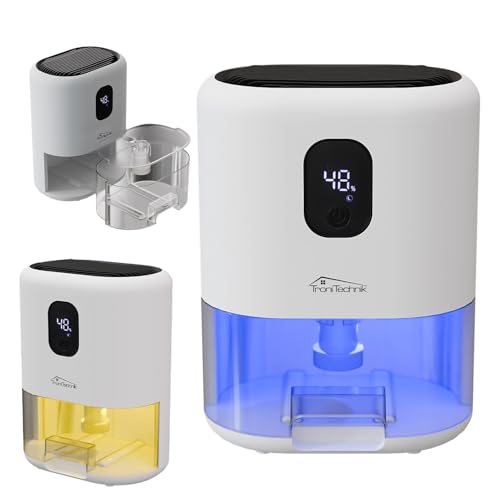
Using a dehumidifier correctly
Dehumidifiers help with condensation, but winter air is already dry.
Our approach:
-
Short daytime use (about 1 hour per day)
-
Target humidity: 45–55 %
-
Avoid dropping below 40 %
A simple hygrometer is highly recommended.
Using a humidifier responsibly
Heating dries the air, which can irritate sensitive nasal passages.
Our experience:
-
Aim for 45–55 % humidity
-
Daily short ventilation
-
Turn humidifier on 1–2 hours before bedtime, then off
-
Do not spray directly toward bed
-
Clean water tank every 2–3 days
-
Empty leftover water daily

Result: The congestion disappeared
After removing mold, improving ventilation, and maintaining balanced humidity,
we noticed clear improvement by day three.
By day five, our child’s nasal congestion had nearly disappeared.
We finally found the real cause – and a solution that worked.
We hope our experience can help other parents facing similar issues.